Project Overview
This Brighton East property is a stunning contemporary coastal home, set back from the street behind a generous front garden. The original driveway was a plain concrete expanse that did little to complement the home's architectural quality. The homeowners wanted a driveway that would make a statement — a premium bluestone entrance that would create a sense of arrival and set the tone for the quality of the home beyond.
The project extended beyond the driveway itself. The homeowners wanted the paving to flow seamlessly into a new front entrance with bluestone steps, integrated garden edging along the driveway borders, and a cohesive landscape design that tied the entire front yard together.
Before & After
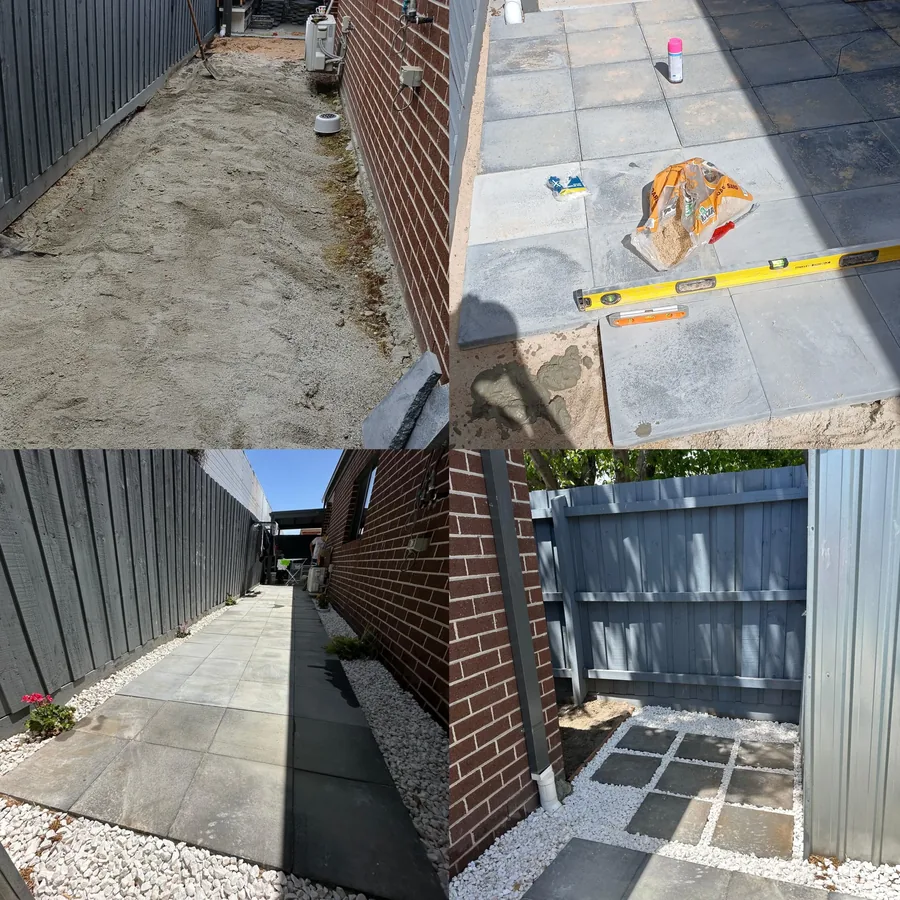
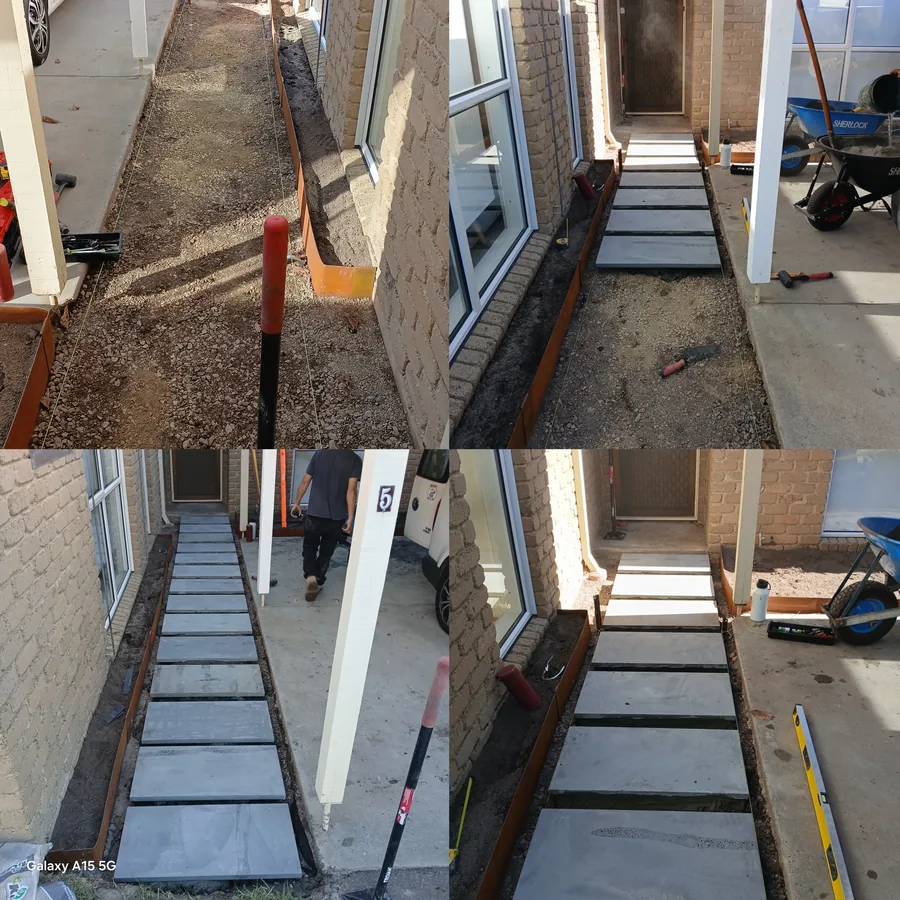
Full gallery available — contact us for high-resolution photos of this Brighton East transformation.
Project Specifications
The Challenge: Sandy Coastal Soil and Salt Considerations
Brighton East's proximity to Port Phillip Bay means the area is characterised by sandy soil — a challenging substrate for paving. Unlike clay or loam, sandy soil doesn't compact as densely and can shift over time if not properly prepared. The soil on this particular site was predominantly sand with some organic material from the established front garden.
Salt spray from the bay is another factor in coastal areas. While Brighton East is not directly on the waterfront, salt-laden air can affect paving materials, particularly unsealed natural stone. Efflorescence (white salt deposits) and surface deterioration are risks if materials aren't chosen and treated correctly.
The homeowners also wanted a seamless transition from the driveway to the garden and entrance area, requiring careful integration of the bluestone edging with existing garden beds and the new entrance steps.
Our Solution: Extra-Deep Base and Premium Material Selection
We excavated the entire driveway area to 250mm — deeper than our standard 200mm — to compensate for the sandy soil conditions. The extra depth allows for a thicker crushed rock base that provides greater stability. We used a well-graded Class 2 crushed rock with fines that bind together when compacted, creating a stable platform that performs well even in sandy conditions.
Each 100mm lift of the base was compacted with a 600kg vibrating roller, making four passes per lift instead of the standard three. This extra compaction effort is essential for sandy sites to achieve the required density. We also installed a geotextile separation layer between the sand subgrade and the crushed rock base to prevent intermixing.
For the bluestone, we sourced 40-50mm thick Victorian bluestone flagging directly from a quarry in the Western District. The random flagstone pattern uses irregularly shaped stones that are hand-fitted to create a natural, organic look. The varying thickness (40-50mm) allows different-sized stones to sit at the same finished level — a technique that requires significant skill and experience to execute well.
All bluestone was sealed with a high-quality penetrating sealer that protects against salt staining, oil spills and general weathering while maintaining the natural appearance of the stone. The sealer soaks into the surface rather than sitting on top, so the finish remains natural-looking and slip-resistant.
Garden Edging and Entrance Steps
The integrated bluestone garden edging was installed along both sides of the driveway, creating a clean separation between the paved surface and the garden beds. The edging stones are set vertically with a consistent 50mm exposed height, providing a crisp, architectural line that defines the driveway edges.
The front entrance features three bluestone steps leading from the driveway to the front door landing. The steps are constructed from 50mm thick bluestone treads with 150mm rises — a comfortable, code-compliant proportion. The step risers are finished with matching bluestone, and LED strip lighting was installed under the nosing of each tread for safety and ambience.