Project Overview
This substantial Glen Waverley property featured a long, steep driveway that was originally finished with tired, cracked asphalt. The homeowners were undertaking a major renovation of their home and wanted the driveway to make a statement that matched the quality of the renovation. Their vision was a premium paved driveway with classic brick herringbone at the centre and elegant bluestone banding along the edges.
The project was one of the most technically challenging we've undertaken — a 100m² surface area with a steep gradient, reactive clay soil, and strict Monash Council stormwater requirements. Every aspect of the design needed to be engineered for long-term stability on this demanding site.
Before & After
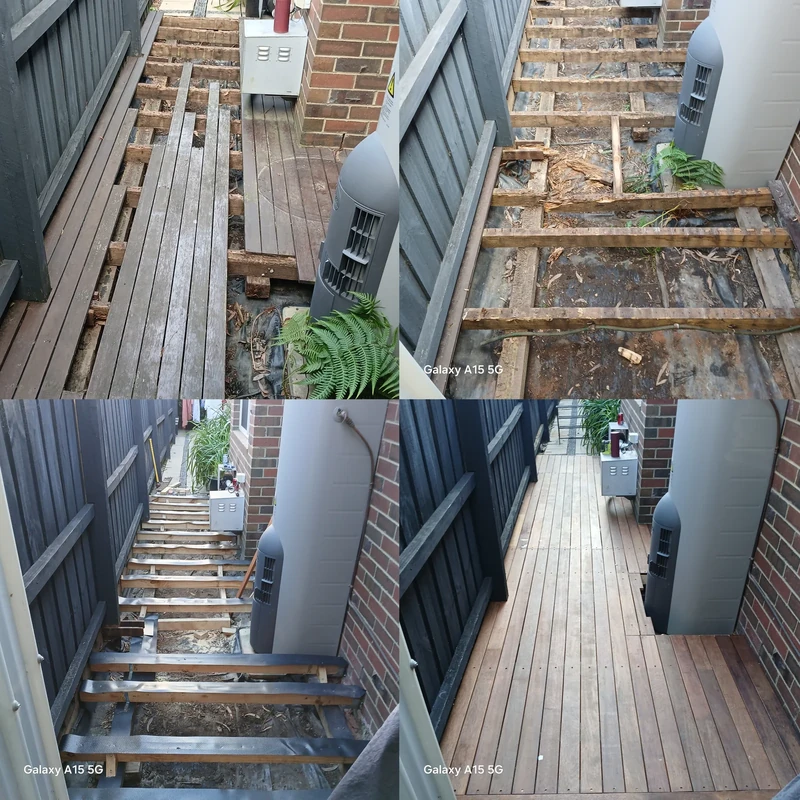
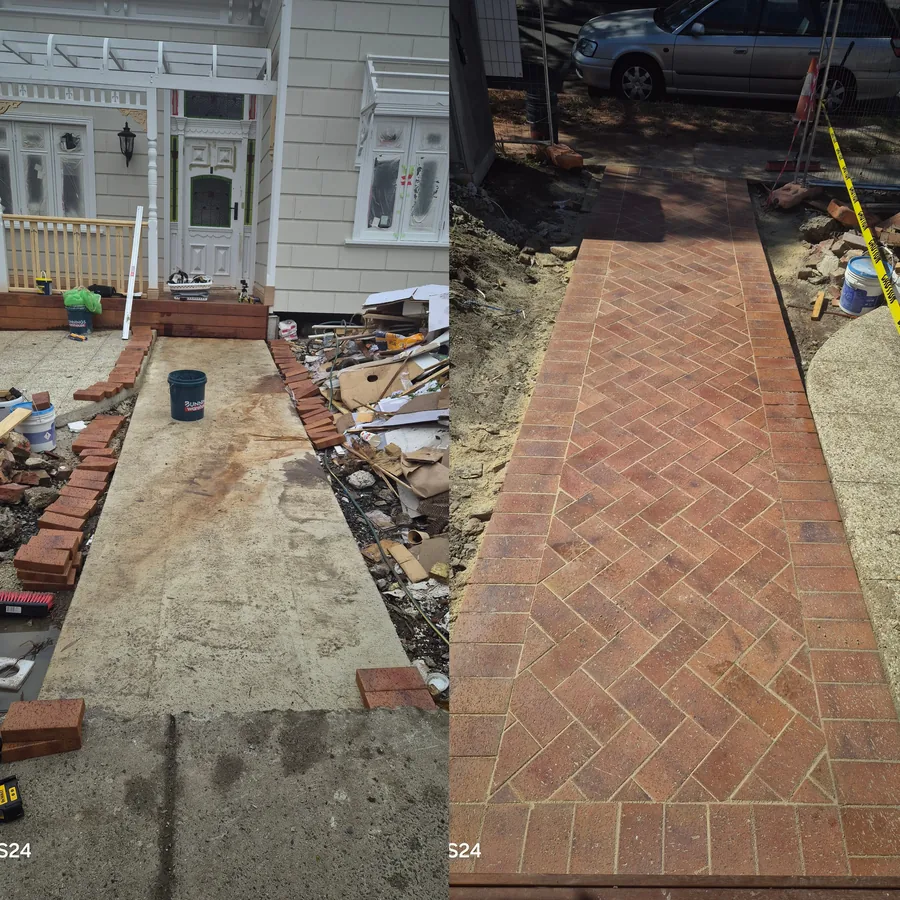
View the complete Glen Waverley project gallery — contact us for high-resolution photos.
Project Specifications
The Challenge: Steep Gradient, Clay Soil and Council Requirements
The driveway gradient was approximately 1:8 (12.5%) — steep enough to create significant challenges for both construction and long-term stability. At this gradient, water flow during rain is substantial, and standard paving methods would risk washout, paver movement and drainage issues.
The underlying soil was reactive clay, common in the Glen Waverley area. Clay expands when wet and contracts during dry periods, which can cause paving to shift, crack or sink if not properly managed. The existing asphalt driveway had already shown signs of this — with cracks, dips and uneven surfaces throughout.
Monash Council required that the new driveway not increase stormwater runoff compared to the existing surface and that all stormwater be captured and directed to the council drainage system — not onto the road or neighbouring properties.
Our Solution: Engineered Base with Sub-Soil Drainage
We excavated the entire 100m² area to a depth of 250mm — 50mm deeper than standard — to accommodate a 200mm compacted crushed rock base. This extra depth is critical on reactive clay sites because the thick rock base acts as a buffer, isolating the paving layer from the movement of the clay below.
Before the rock base was installed, we laid a geotextile fabric membrane over the clay subgrade. This prevents clay from migrating up into the rock base during wet periods and maintains the integrity of the drainage layers. A sub-soil drainage pipe was installed along the low side of the driveway to capture any subsurface water before it could affect the base.
The 200mm base was installed in two 100mm lifts, each compacted with a 600kg vibrating roller to achieve 98% modified compaction — exceeding the Australian standard for residential driveways. This level of compaction is essential for a steep driveway to prevent the base from migrating down the slope over time.
The Aesthetic: Herringbone Brick Centre with Bluestone Borders
The homeowners chose a 45° herringbone pattern for the centre section, using dark charcoal brick pavers that provide excellent contrast against the bluestone banding. The bricks were laid from the bottom of the driveway upward to maintain the pattern alignment on the slope.
The bluestone border banding uses sawn and pitched Victorian bluestone in 300mm wide strips along both edges, with matching bluestone at the street crossing. The blue-grey tones of the bluestone complement the charcoal bricks perfectly and add a premium finish that elevates the entire driveway.
Precast concrete kerbs were installed along the driveway edges, set in concrete haunching for maximum stability. The kerbs are 50mm higher than the paved surface, providing a clean edge and preventing vehicles from driving onto garden beds.
Stormwater Compliance
A new stormwater pit was installed at the low point of the driveway, connected to the council drain via 150mm PVC pipe. Surface water is directed to the pit via the gradient and a series of channel drains at strategic points. The entire system was designed by a civil engineer and approved by Monash Council before construction began.