Project Overview
This Oakleigh property featured a tired, cracked concrete driveway that detracted from the home's character appeal. The homeowners wanted a warm, traditional look that would complement their renovated period home while providing durable, long-lasting performance. Their vision was a recycled brick herringbone driveway — a classic choice that adds instant kerb appeal and suits the established Oakleigh neighbourhood.
The project required careful planning due to the significant slope across the site, which demanded an integrated drainage solution to prevent water pooling and surface damage. The result is a stunning transformation that has completely changed the face of this Oakleigh property.
Before & After
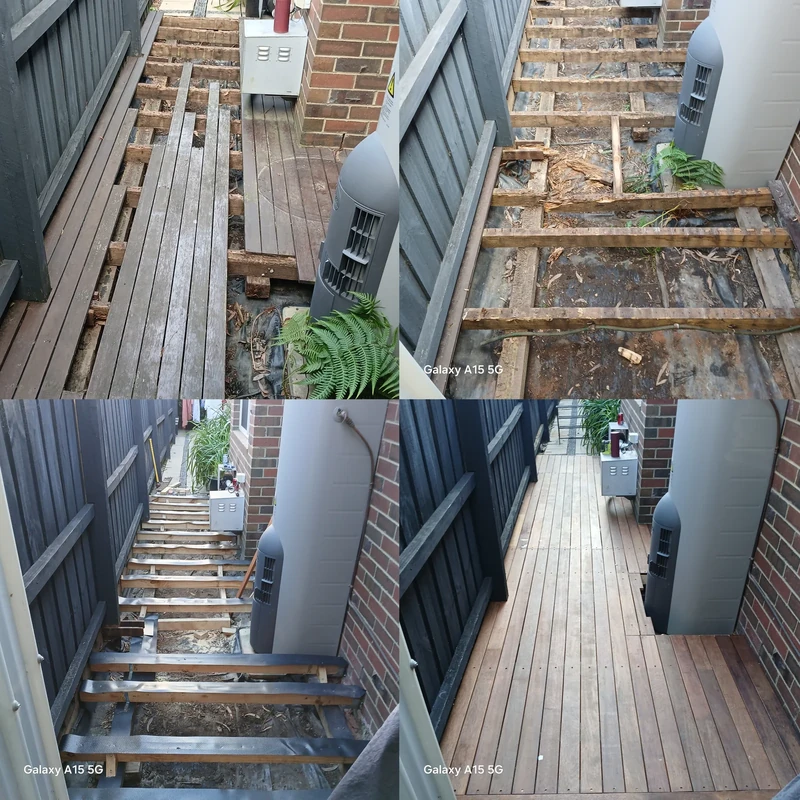
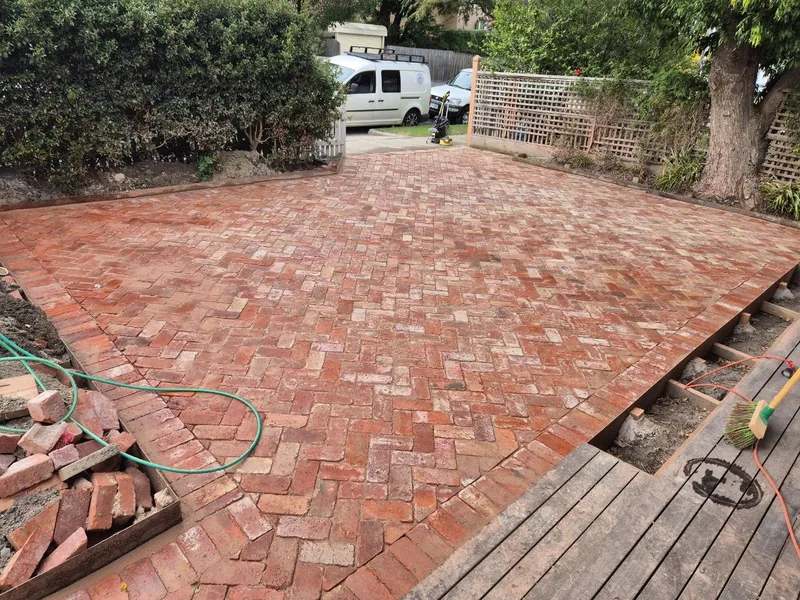
Professional photos available — contact us to see the full gallery for this Oakleigh project.
Project Specifications
The Challenge: Sloped Driveway with Existing Concrete Removal
The primary challenge was the sloping driveway, which dropped approximately 600mm from the street to the garage. This gradient created significant water flow issues during rain — the old concrete driveway had developed cracks from poor drainage and the surface was dangerous when wet.
We also needed to remove and dispose of approximately 12m³ of existing concrete. This was carefully broken up and removed by our team, with the material recycled through a local concrete crushing facility. Removing the concrete revealed the original clay base, which required assessment and preparation before we could begin the new installation.
Our Solution: Trench Drainage and Premium Base Preparation
To address the slope and water management challenges, we installed a Sleekline trench drain across the full width of the driveway at the mid-point, connecting to the existing stormwater network. This prevents water from running down the entire length of the driveway and ensures surface water is captured and diverted efficiently.
The base preparation involved excavating to a depth of 200mm, installing a 150mm layer of compacted crushed rock road base, and a 50mm sand bedding layer. Each layer was compacted in stages using a vibrating roller — essential for a sloped installation where movement or settling would be immediately visible in the herringbone pattern.
For the bricks, we sourced recycled red clay pavers from a reputable Melbourne supplier. These were laid in a 90° herringbone pattern, which provides excellent structural strength for vehicular traffic while creating the classic, timeless look the homeowners wanted. The perimeter was finished with clay paver edging blocks, restrained with concrete haunching to prevent lateral movement.
The Finishing Details
All joints were filled with polymeric sand — a critical choice for a sloped driveway. Unlike traditional sand, polymeric sand hardens when activated, locking pavers in place and preventing washout even during heavy rain. The surface was lightly misted and compacted to ensure the sand settled deep into the joints.
The homeowners chose a warm terracotta-toned recycled brick that complements the existing brickwork on their home. The clay edging provides a clean, finished border that separates the driveway from garden beds and the lawn.