Home › Blog › Paving Timeline Guide — Melbourne 2026
How Long Does Paving Take? Timeline Guide from Start to Finish
By Antonio PrimeScape | May 2026
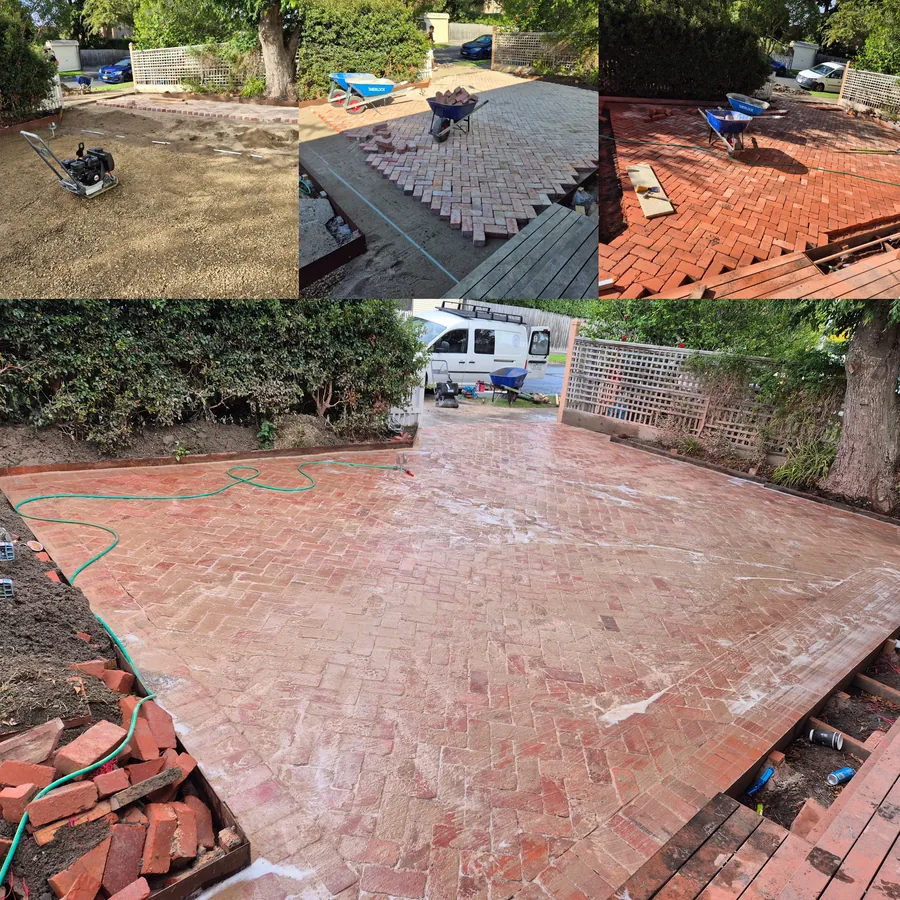
"When will my driveway be finished?" is the most common question we get after a client signs off on a quote. The honest answer: it depends on the size, material, site conditions, and — let's be real — Melbourne's unpredictable weather.
Here's a realistic day-by-day timeline for a typical brick paving driveway project (40–50m²) in Melbourne's south-east, along with factors that can speed it up or slow it down.
Pre-Construction (1–2 Weeks Before)
The timeline starts before the first excavator arrives. Good contractors handle these steps in advance:
- Site measure and material order: Pavers, road base, sand, edge restraints — all ordered and scheduled for delivery. Lead time on materials is typically 3–7 days depending on availability.
- Permits and approvals: If your driveway crosses a council footpath or involves changes to drainage, permits may take 2–4 weeks. We handle these on your behalf.
- Dial Before You Dig: Service location is required before any excavation. This takes 2–5 business days.
- Utility marking: Gas, water, electricity, NBN — all marked on-site to avoid damage during excavation.
Day 1 — Demolition and Excavation
This is the noisy bit. The crew arrives early (7am typically) and:
- Removes the existing driveway or surface. Old concrete or asphalt goes to recycling.
- Excavates to the required depth — typically 150–200mm for pedestrian areas, 250–300mm for driveways.
- Haul-away of all waste material.
Time: 1 day for 40–50m². Add half a day if there are complex edges, retaining walls, or large trees near the work area.
Day 2 — Base Preparation
The most critical phase of any paving project. A bad base means sinking, shifting pavers within a few years.
- Spread and level 100–150mm of road base (crushed rock).
- Compact in layers with a plate compactor or roller — each layer compacted to 95%+ density.
- Install edge restraints (concrete kerb, steel edging, or plastic paver restraints) to stop pavers from spreading over time.
- Spread and screed a 25–30mm layer of bedding sand.
Time: 1 full day. Base preparation is slower if ground conditions are poor (soft soil, clay, water issues).
Day 3 — Paver Installation
The exciting part — pavers go down. A skilled crew of 2–3 can lay 40–50m² of standard brick pavers in a day.
- Pavers laid according to the chosen pattern (herringbone, stretcher bond, basketweave).
- Herringbone is the slowest pattern — more cutting and fitting required.
- Stretcher bond is the fastest — minimal cutting on straight runs.
- Cutting around curves, drains, and irregular edges adds time.
Time: 1–2 days depending on pattern complexity and cutting requirements. Simple rectangular driveway with stretcher bond: 1 day. Herringbone with curved edges and multiple cuts: 2 days.
Day 4 — Compaction, Sanding, and Finishing
- Plate compactor passes over the newly laid pavers to settle them into the sand bed. Multiple passes in different directions.
- Kiln-dried sand swept into all joints — usually 2–3 applications with compaction in between.
- Final compaction pass.
- Clean the surface — remove excess sand and any debris.
Time: Half to full day.
Curing Time — When Can You Use It?
Foot traffic: Immediately after final compaction. You can walk on the paving the same day.
Vehicle traffic (standard paving): Wait 24–48 hours after final sanding to drive on it. The sand needs to settle fully.
Vehicle traffic (permeable paving with aggregate joints): Drive on it immediately — aggregate joints don't need settling time.
Sealing: If you're sealing natural stone or concrete pavers, wait 4–6 weeks after installation. This allows the sand to settle and any efflorescence to wash away naturally.
Total Timeline Summary
Brick paving driveway (40–50m²): 4–6 working days from demolition to completion.
Concrete driveway (40–50m²): 2–3 days for pour and finish, then 7 days curing before you can drive on it.
Small patio or path (10–20m²): 2–3 days total.
Large driveway + patio (80–100m²): 7–12 working days.
What Can Delay Your Paving Project?
- Weather (Melbourne's #1 cause): Rain stops excavation, base prep, and sanding. Concrete can't be poured in heavy rain. Expect 1–3 weather delay days in winter.
- Underground surprises: Old tree roots, buried concrete, poor soil, or unmapped services add excavation time.
- Material availability: Some premium pavers have 1–2 week lead times. Always confirm stock before scheduling.
- Council inspections: Some councils require a mid-project inspection of the base before pavers go down.
- Changes mid-project: Adding drainage, lighting, or extra area to the original plan.
How to Speed Up Your Paving Timeline
- Book early: The best paving contractors book 3–8 weeks ahead in spring and summer.
- Choose standard materials: Common pavers (Boral, Austral, Adbri) are stocked locally. Imported or custom colours add lead time.
- Choose a simpler pattern: Stretcher bond is fastest; herringbone is slowest.
- Clear the site: Remove cars, garden furniture, pot plants before the crew arrives.
- Get permits early: If council permits are needed, apply before you book the contractor.
Read our paving cost guide for Melbourne for pricing breakdowns by material and size, and our guide to choosing the right paving for your specific project.
Frequently Asked Questions
Can I drive on new paving immediately?
For brick paving, wait 24–48 hours after final sanding and compaction. For concrete, wait at least 7 days. For permeable paving with aggregate joints, it's fine immediately.
Does weather really delay paving that much?
Yes — especially in Melbourne. Excavation, base compaction, and sanding all require dry conditions. A light drizzle won't stop laying pavers, but heavy rain or persistent wet weather pushes the schedule out significantly.
How long does it take to pave a patio?
A small patio (15–20m²) typically takes 2–3 working days. A larger entertaining area (40–60m²) takes 4–6 days.
Why does my paving contractor quote 2 weeks for a 5-day job?
Reputable contractors build weather buffers and scheduling flexibility into their timeline. When we quote 10–14 calendar days for a 5-day project, it accounts for Melbourne rain, material deliveries, and curing time — we'd rather under-promise and over-deliver.
Do I need to be home during the paving installation?
Not necessarily, but we recommend being available on Day 1 to confirm site access, parking, and any specific requirements. A key contact by phone is sufficient after that.
Ready to Book Your Paving Project?
Free written quotes across Melbourne's south-east. We'll give you a realistic timeline before you commit.
📞 0406 170 544
📋 Free Quote Form