Paving Maintenance Guide — Melbourne 2026
By Antonio PrimeScape | April 2026
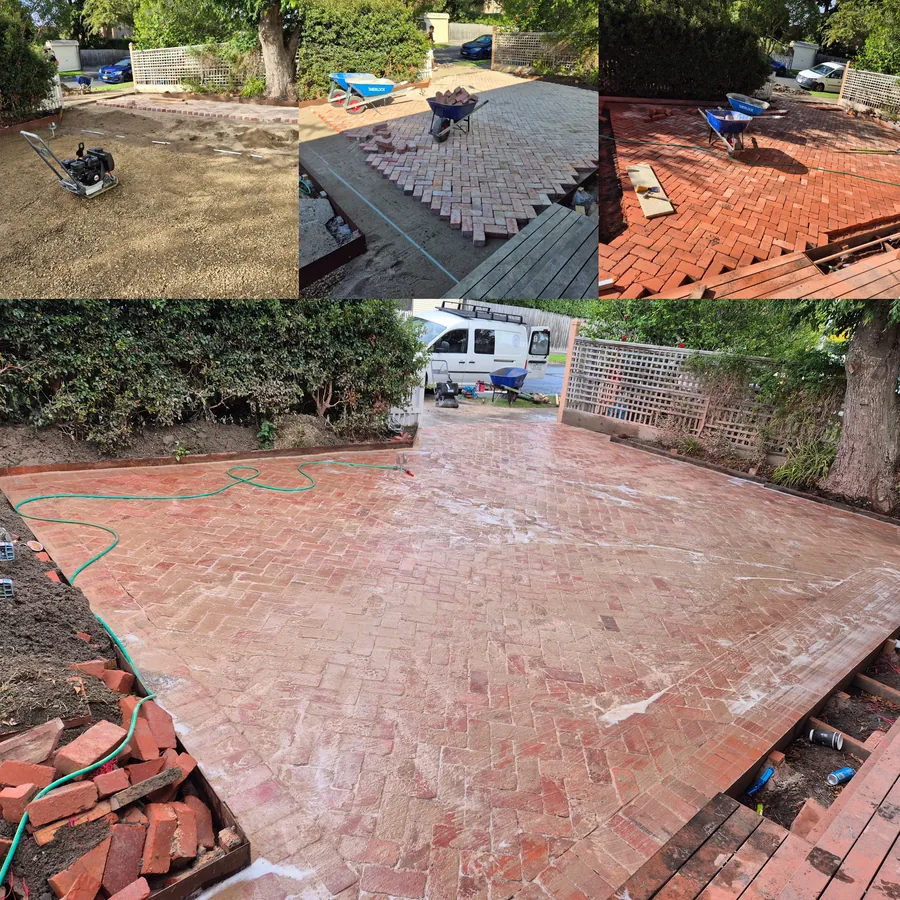
Quality paving is a long-term investment. With the right maintenance, brick paving lasts 30–50 years, bluestone even longer. Here's what you actually need to do (and what you don't).
Brick and Concrete Paving
Cleaning: A pressure wash once or twice a year is usually all you need. Use a fan tip (not a point jet) to avoid lifting sand from the joints. A mild detergent helps with oil or rust stains.
Joints: Check the jointing sand every 2–3 years. If it's washing out or weeds are growing, top up with kiln-dried sand or polymeric sand (polymeric sets harder and resists weeds better). Sweep it in, then compact with a plate compactor or mallet.
Sealing: Clay brick pavers generally don't need sealing. Concrete pavers benefit from a penetrating sealer every 5 years to reduce water absorption. Don't use a surface sealer — it peels.
Weeds: Polymeric sand is the best prevention. For existing weeds, use a flame weeder or a salt-based weed killer applied directly to the joints (avoid broad spraying which can stain).
Bluestone and Natural Stone
Sealing: Apply a penetrating stone sealer 4–6 weeks after installation, then every 4–5 years. Use a pH-neutral cleaner for routine maintenance — never acidic cleaners (including vinegar) which etch the surface.
Efflorescence: White powder deposits on the surface are common in the first year — this is mineral salts migrating from the concrete base. It washes off naturally with rain over time, or use a diluted efflorescence cleaner.
Concrete Driveways
Concrete requires minimal maintenance. Pressure wash once a year. Oil stains: treat with a degreaser and scrub before pressure washing. Cracks: hairline cracks in the surface are cosmetic and don't affect structural integrity. Growing cracks should be assessed — call us.
When to Call a Professional
- Multiple pavers sinking or lifting — indicates base failure or tree root movement
- Growing cracks in concrete — may indicate soil movement or inadequate base
- Mortar joints in crazy paving crumbling — repointing required
- Retaining wall bowing or moving — urgent, call immediately
Get a Free Quote Today
Free written quotes across Melbourne's south-east. What we quote is what you pay.
📞 0406 170 544 💬 Send a Text