
By Antonio PrimeScape | May 2026
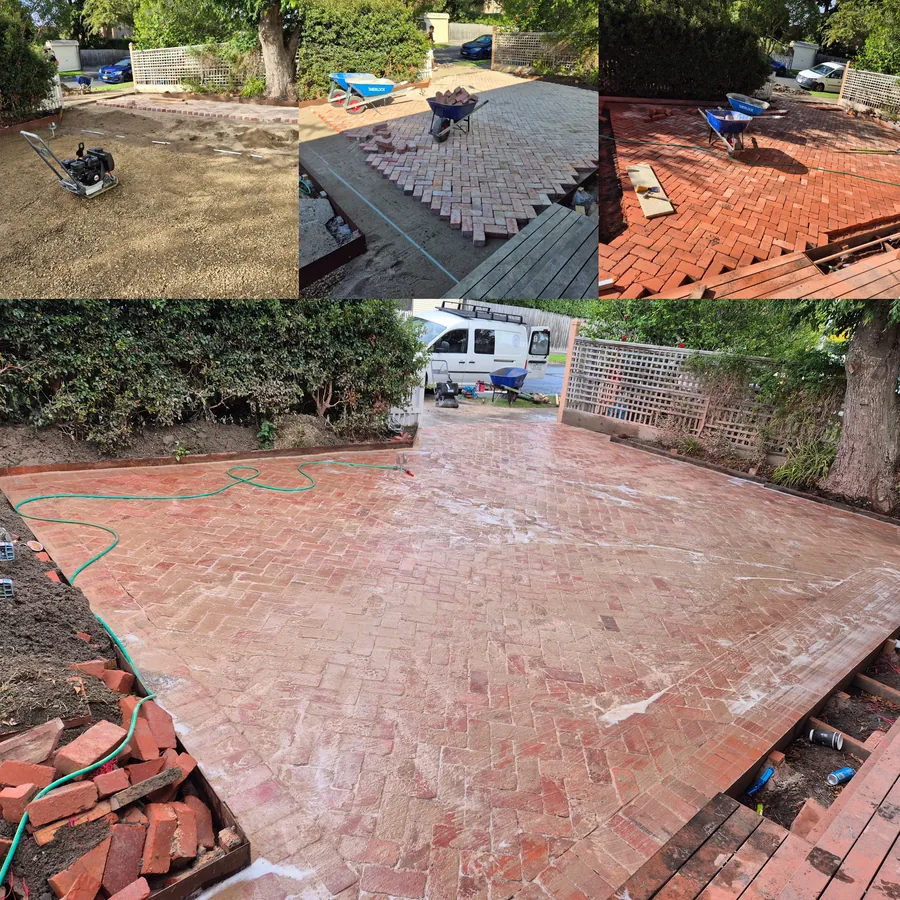
Your paved driveway and patio take a beating from Melbourne's weather — scorching summer heat, sudden downpours, and the occasional frost. With proper care, quality paving lasts 30–50 years. Without it, weeds take over, joints wash out, and pavers start sinking.
Here's a practical maintenance guide covering cleaning, sealing, weed control, and repairs for the most common paving materials used around Melbourne.
Brick pavers and concrete pavers: A pressure wash once or twice a year is usually sufficient. Use a fan-tip nozzle (not a point jet) at medium pressure — too much force can blow the sand out of your joints. A mild detergent or dedicated paver cleaner helps lift oil stains, moss, and grime.
Bluestone and natural stone: Use a pH-neutral stone cleaner only. Acidic cleaners — including vinegar, bleach, and many household degreasers — etch the surface of natural stone permanently. A soft brush and warm water works wonders for routine grime.
Concrete driveways: Pressure wash annually. For oil stains, apply a degreaser, scrub with a stiff broom, let it sit 10 minutes, then rinse.
💡 Pro tip: Schedule your clean in late spring (October–November) after Melbourne's wet winter and before the dry summer sets in.
The sand between your pavers isn't just filler — it locks the pavers together and prevents movement. Over time, wind and rain wash it out.
Sealing is one of the most debated topics in paving. Here's the straight answer for Melbourne homes:
Clay brick pavers: Most clay bricks don't need sealing — they're fired at extremely high temperatures and are naturally low-porosity. Sealing is purely cosmetic (it darkens the colour) and optional.
Concrete pavers: These are more porous and benefit from a penetrating sealer applied every 5–7 years. It reduces water absorption, minimises efflorescence (white salt deposits), and makes future cleaning easier. Avoid surface/coating sealers — they peel and look terrible.
Bluestone and natural stone: Apply a penetrating stone sealer 4–6 weeks after installation, then every 4–5 years. This prevents staining from wine, oil, and leaf tannins — especially important for entertaining areas and patios.
Exposed aggregate concrete: Sealing every 3–5 years protects the surface and keeps the colour vibrant.
Melbourne's damp winters make moss and weeds a recurring nuisance. Prevention is far easier than cure:
If individual pavers are sinking, rocking, or lifting, the underlying base has likely failed — usually from poor compaction during installation, tree root growth, or water erosion of the base layer.
What you can do: Lift the affected pavers, remove and replace the base material (road base or crusher dust), compact it thoroughly, re-lay the pavers, and re-sand the joints. For 1–3 pavers this is a DIY-able weekend job.
When to call a professional: If multiple pavers across the driveway are sinking, or if the area exceeds 5m², the base likely needs full replacement. This is not a DIY job — call Antonio PrimeScape for an assessment.
Here's a simple schedule to keep your paving in top shape year-round:
Spring (Sept–Nov): Pressure wash, check joints, top up sand, apply sealer if needed. Ideal weather for sealing — not too hot, not too cold.
Summer (Dec–Feb): Light sweeping, spot-treat stains immediately (oil, wine, BBQ grease). Avoid heavy cleaning in extreme heat — sealers need moderate temperatures to cure.
Autumn (Mar–May): Clear fallen leaves promptly — leaf tannins stain light-coloured pavers and bluestone. Check for weed growth after the summer heat.
Winter (Jun–Aug): Minimal maintenance. Fix drainage issues if water is pooling. Plan any paving projects for spring installation.
Once a year is sufficient for most Melbourne driveways. Twice a year if you have large trees nearby that drop sap or berries.
Diluted bleach (1:10) is safe on concrete and brick pavers for removing moss and mould. Never use bleach on bluestone, travertine, or other natural stone — it will etch the surface.
Penetrating sealers last 4–7 years depending on traffic and weather exposure. Surface film sealers last 1–3 years and are not recommended.
No — wait 4–6 weeks for brick and concrete pavers. The sand needs to settle and any efflorescence needs time to form and be washed off by rain. Natural stone can be sealed after the mortar has fully cured (usually 2–4 weeks).
No — sealing protects the paver surface, not the joints. For weed prevention, use polymeric sand in the joints.
Hairline surface cracks in concrete are typically cosmetic (shrinkage cracks) and don't affect structural integrity. If cracks are wider than 3mm or growing over time, call a professional to assess the base.
For a detailed comparison of paving materials and their long-term care, read our guide on brick paving maintenance in Melbourne and the concrete vs pavers driveway comparison.
Free written quotes across Melbourne's south-east. What we quote is what you pay.
📞 0406 170 544 📋 Free Quote Form