From Glen Waverley to Box Hill and Doncaster, most of Melbourne's east sits on reactive clay. Here's how to choose paving that copes with it — and why the base matters more than the paver.
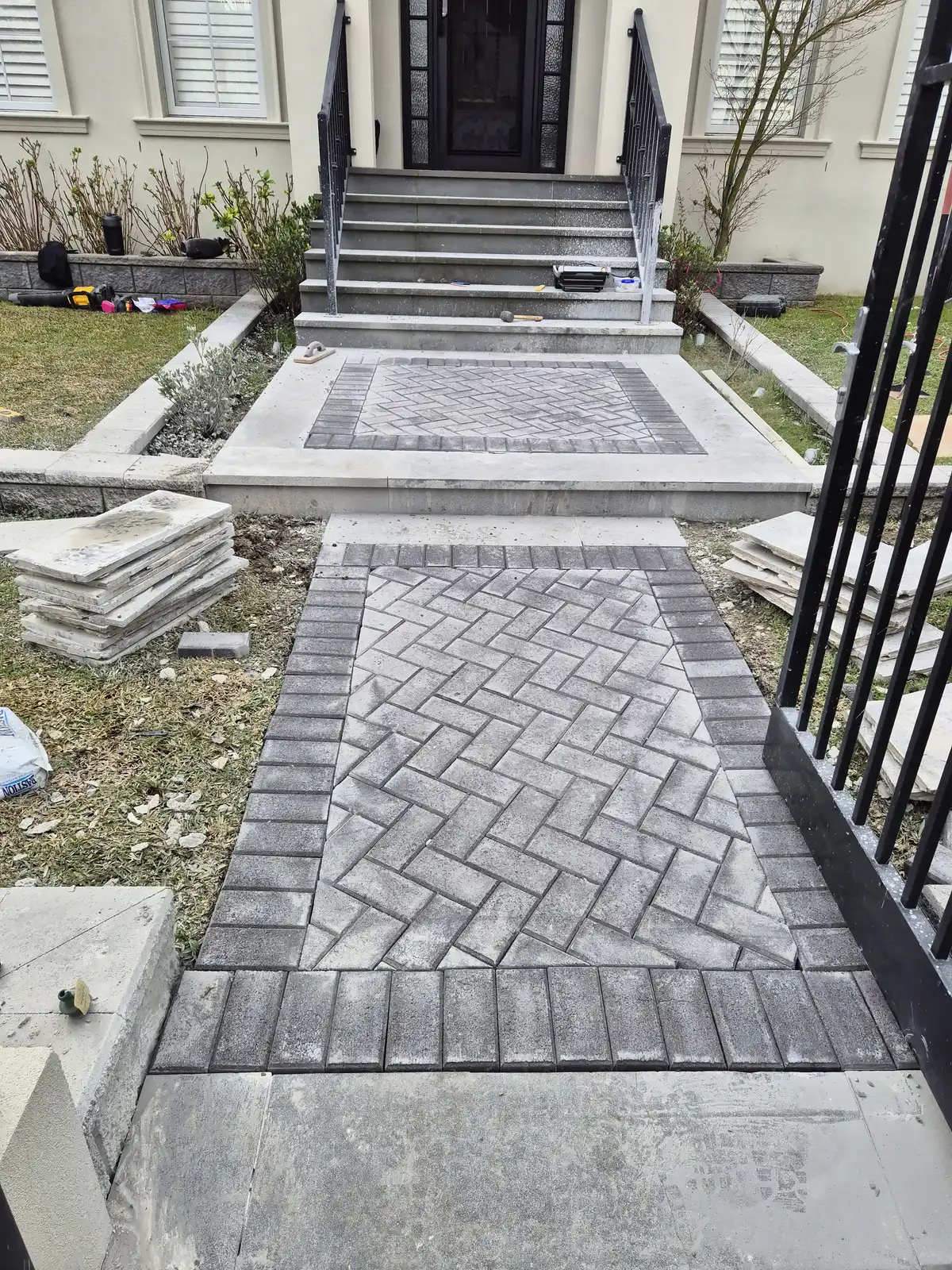
Reactive clay swells when it gets wet and shrinks as it dries. Across a Melbourne year — wet winters, dry summers — the ground under your paving moves up and down. Rigid surfaces like plain concrete crack when that movement is uneven. Paving that isn't built for it dips, humps and opens up at the joints.
On clay, the best paving is a segmental paver — clay brick, concrete paver, bluestone or travertine — laid on a deep, compacted crushed-rock base with good drainage and firm edges. Segmental paving is flexible: it can move slightly without cracking, and if a section does settle, it can be lifted and relaid. The paver matters, but the base and drainage matter more.
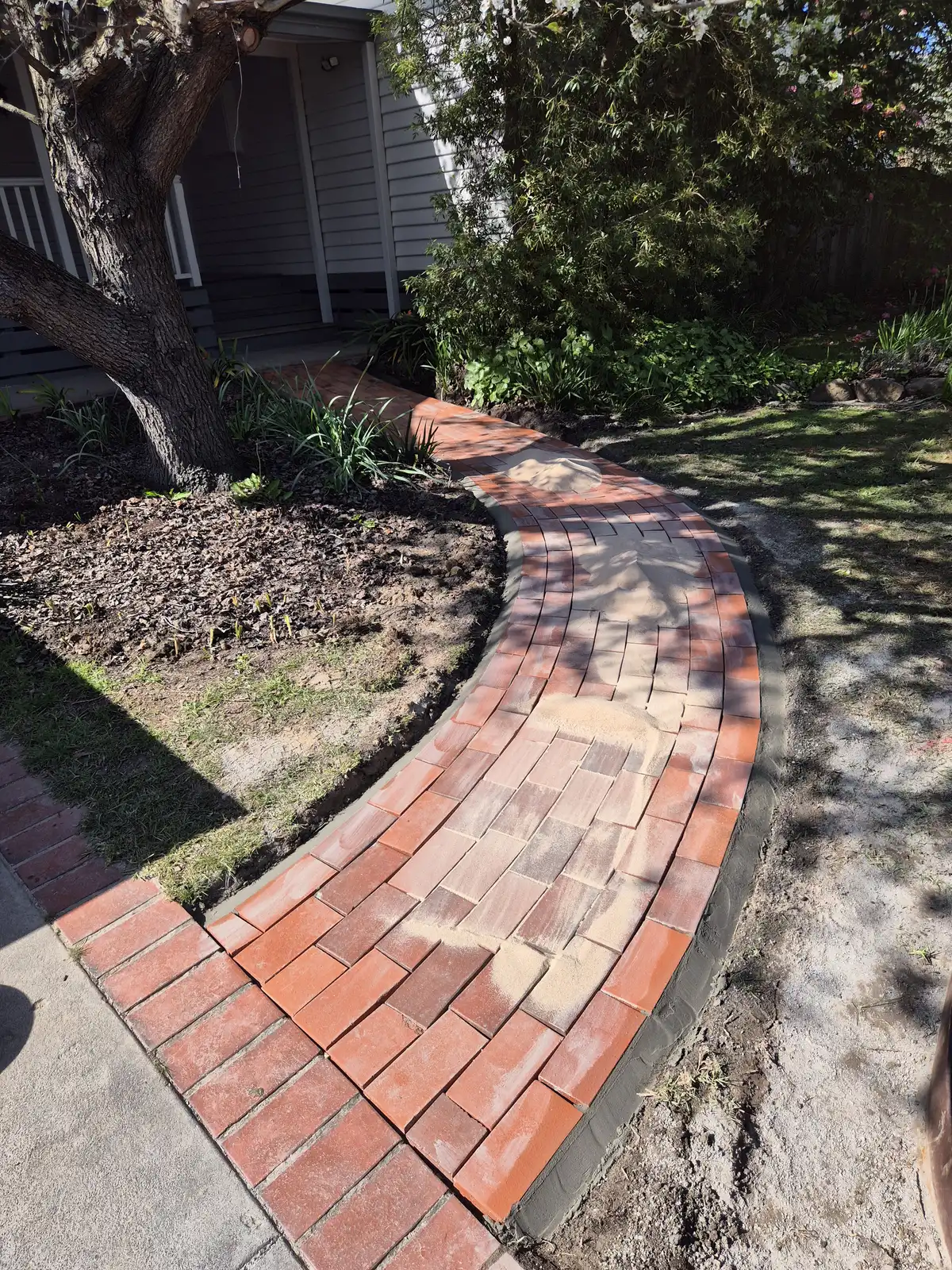
Clay brick pavers ($150–$250/m² laid) are hard-wearing, colour-fast and flexible as a system. Laid in herringbone they lock together and resist creeping — a good choice for driveways on clay.
Concrete pavers are economical and come in many colours and sizes. Choose a vehicle-rated thickness for driveways. Paved driveways are $140–$220/m² laid.
Natural stone ($200–$320/m² laid) works well on clay when laid on a solid base. For large-format stone, a mortar bed over a compacted base keeps the surface flat.
Permeable paving ($150–$220/m² laid) lets water soak into an open-graded base instead of running off. On clay, the base must be designed carefully because clay drains slowly — sometimes with a subsoil drain at the bottom. Done right, it reduces puddles and runoff.
On clay we dig out the topsoil and soft material, lay a geotextile where needed, then place and compact crushed rock in layers — deeper for driveways than for paths. Edge restraints stop the paving spreading. Falls are set so water runs to drains or garden beds, not toward the house. This is what makes paving last on clay.
Because clay drains slowly, surface water has to be managed. Strip drains at garages and thresholds, pits in courtyards and ag drains behind retaining walls keep water moving. Connections to stormwater in Victoria are done by a registered plumber.
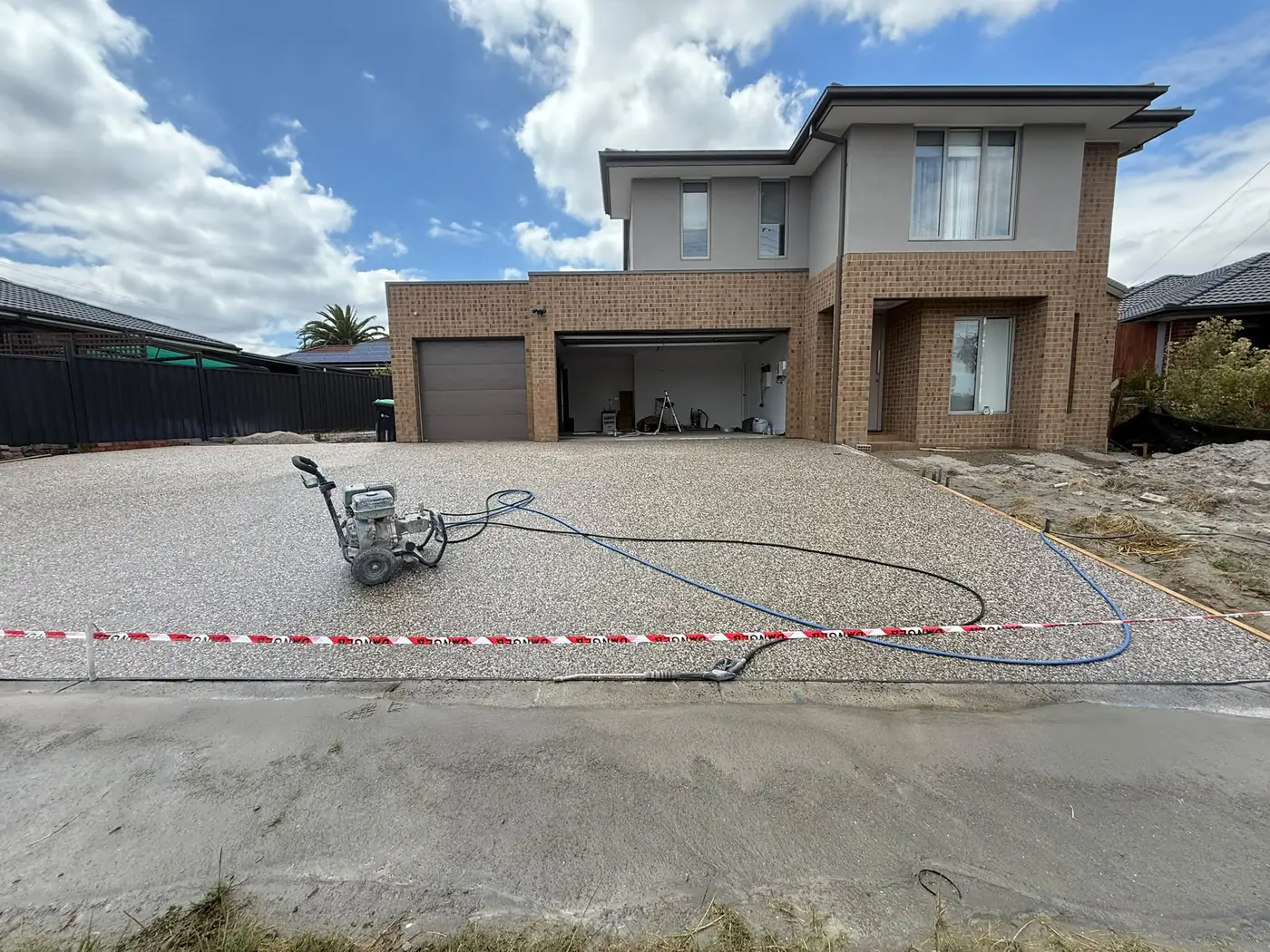
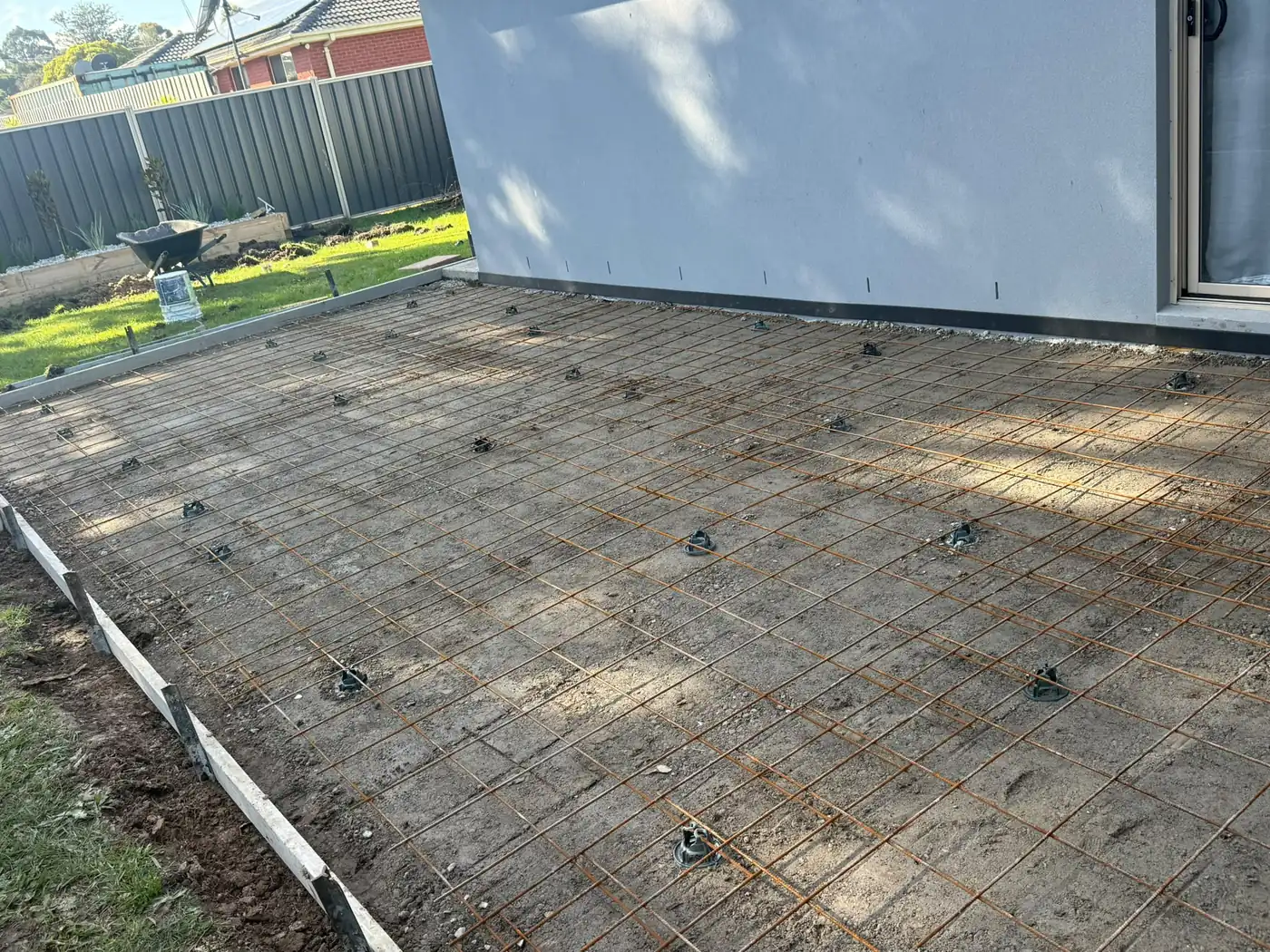
Concrete can work on clay if it's done properly: a compacted base, the right thickness and reinforcement, and saw-cut control joints so any cracking happens in straight, planned lines. Exposed aggregate hides hairline cracks better than plain grey concrete. Where cracking would bother you, or where you might need access for plumbing later, pavers are the more forgiving choice.
Clay holds water, and water pushes against retaining walls. Any wall supporting paving on clay needs an ag drain and free-draining gravel behind it, and the paving above should fall away from the wall. It's a detail that's often skipped and a common reason walls lean.
Large trees draw moisture out of clay, making it shrink in summer, and their roots can lift paving. Keep new paving a sensible distance from significant trees where you can, use flexible or permeable pavers nearby, and check with council before removing or cutting roots of large trees — many are protected in the eastern suburbs.
A single downpipe emptying beside the house can keep the clay underneath permanently wet, while the rest of the yard dries out. That difference is what causes uneven movement. Connecting downpipes to the stormwater (done by a registered plumber) is one of the cheapest ways to protect both paving and footings.
Paving can be laid on clay most of the year, but not on saturated ground straight after heavy rain. In a wet winter we may wait a day or two for the ground to firm up before compacting the base. It's a small delay that makes a big difference to how the paving performs.
Most of the City of Monash, Whitehorse, Manningham, Knox and Boroondara sits on clay — Glen Waverley, Mount Waverley, Wheelers Hill, Box Hill, Blackburn, Doncaster, Vermont South and Camberwell among them. Bayside suburbs like Brighton and Hampton are mostly sandy, which needs a different approach.
Antonio assesses the soil, levels and drainage on every free site visit and explains the base he recommends in the written quote.
Segmental pavers (brick, concrete, bluestone or travertine) on a deep compacted crushed-rock base with good drainage.
It can if the base, reinforcement and control joints aren't right. Pavers are more forgiving.
It depends on use — driveways need a much deeper compacted base than paths. We specify it in the quote.
It can be, with a properly designed base and sometimes a subsoil drain.
⭐ 5.0 Google · 70 reviews · $20M insured · 1‑year workmanship warranty
Antonio completed our bluestone paving in Hampton and the result is outstanding. The levels, drainage and finishing details are flawless. Highly recommended for high-end paving.
We had a fairly complicated drainage issue on the site, but Antonio came up with a solution and executed it perfectly. The workmanship was top quality, and there were no unexpected surprises along the way.
Antonio runs a very professional small business. Friendly, punctual and hard working. Built 2 retaining walls and remodelled our driveway paving. Would use Antonio's service again.
Antonio and his colleague did a great job with our backyard brick laying. Easy to deal with, on time and professional.
Antonio just completed some brick paving alongside our front fence. The paving looks fabulous and was completed in 2 days. He was reliable and the work was completed to a high standard.
Antonio cleared out our small backyard, laid some pavers and built a step around our existing deck. He was quick to respond, well priced, and was happy to change and vary the scope of works as needed.
Send a few details and photos — Antonio will reply the same day (Mon–Sat).
