
Bluestone vs Travertine Paving in Melbourne
They're the two most popular natural stones for Melbourne patios, paths and pool surrounds. Here's how they compare on price, comfort, durability and style, and how to choose between them.
The short answer
Choose bluestone if you want a crisp, classic Melbourne look, the hardest-wearing surface and a stone that suits both period and contemporary homes. Choose travertine if you want a warmer, lighter, Mediterranean look that stays cooler underfoot around a pool. Price is close: bluestone is $220–$265/m² laid and travertine $310–$350/m² laid (inc GST).
Price in Melbourne (2026)
| Item | Guide price |
|---|---|
| Bluestone paving, supplied and laid | $220–$265/m² |
| Travertine paving, supplied and laid | $310–$350/m² |
| Typical 20m² bluestone patio | $4,400–$5,300 |
| Typical 20m² travertine patio | $6,200–$7,000 |
| Pool paving (either stone) | $230–$330/m² |
Try our paving cost calculator for your size. These are guide prices only (inc GST). Every job is different. Your price depends on the size, access, base, drainage and material you choose, so it can come in lower or higher. Send photos and rough measurements to 0406 170 544 for a rough price first, then we visit for free and give you a fixed written price.
Heat underfoot
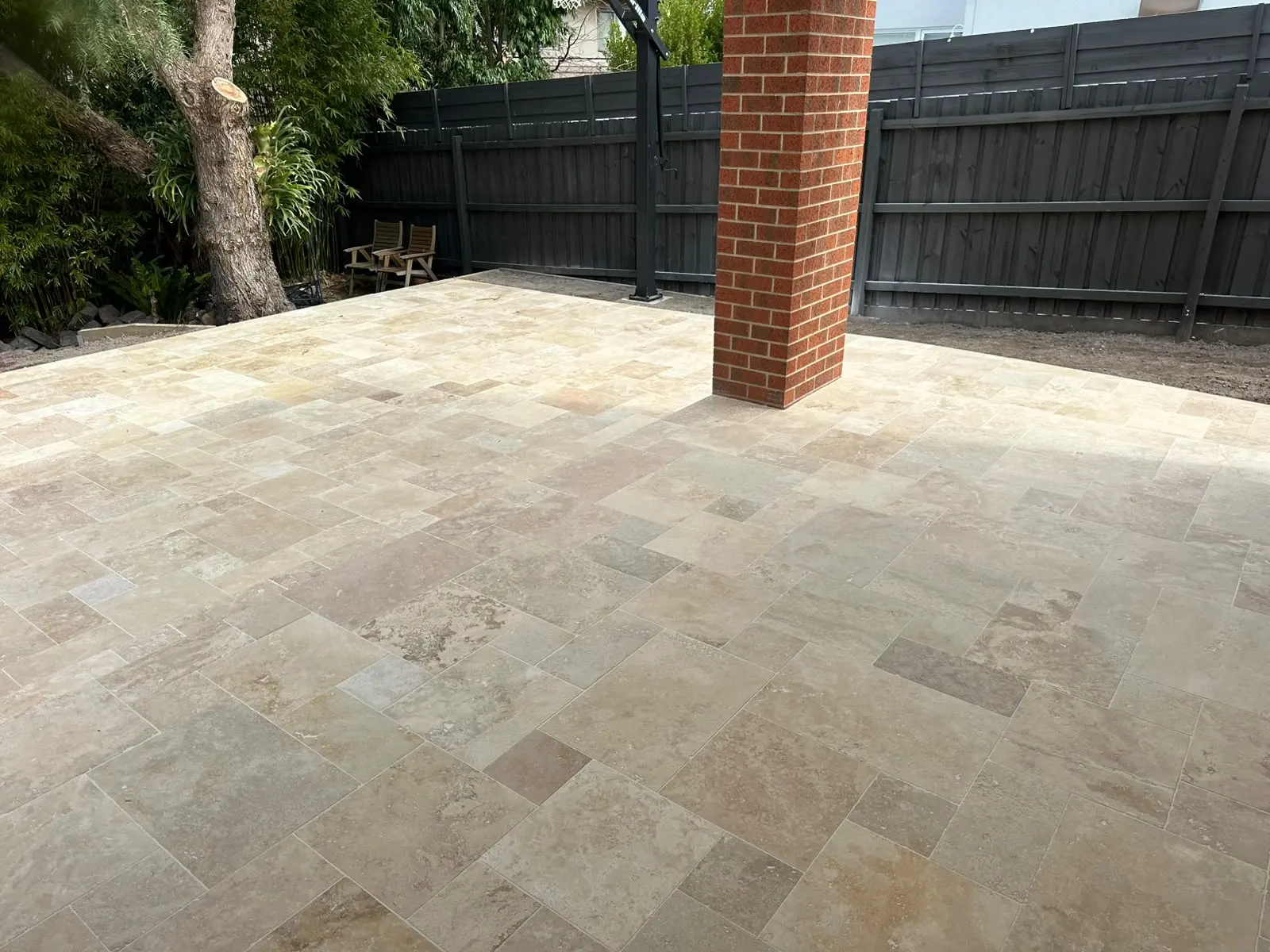
This is often the deciding factor around pools. Bluestone is dark basalt and absorbs heat, so in full afternoon sun it can get hot for bare feet. Light tumbled travertine reflects heat and stays noticeably cooler. If your pool or patio faces west with no shade, travertine is usually the more comfortable choice. A popular Melbourne compromise is a pale travertine surround with bluestone coping.
Durability
Bluestone is one of the densest paving stones available and will outlast almost anything else in a Melbourne backyard. It resists wear, handles cars in the right thickness and ages gracefully. Travertine is softer and more porous; good-quality, well-sealed travertine lasts for decades on patios and pool surrounds, but it isn't the first choice for heavy driveways.
Grip and safety
Both can be safe around water when you choose the right finish. For bluestone, pick a sawn finish with texture, or a flamed or bush-hammered finish around pools. For travertine, tumbled or brushed finishes grip well; avoid polished travertine outdoors.
Maintenance
Both stones should be sealed after laying and resealed every few years. Bluestone can show white efflorescence early on as salts work out of the stone and bedding; it fades with time and cleaning. Travertine's natural holes can collect dirt if left open, so many homeowners choose filled travertine for an easier-to-clean surface.
Look and style
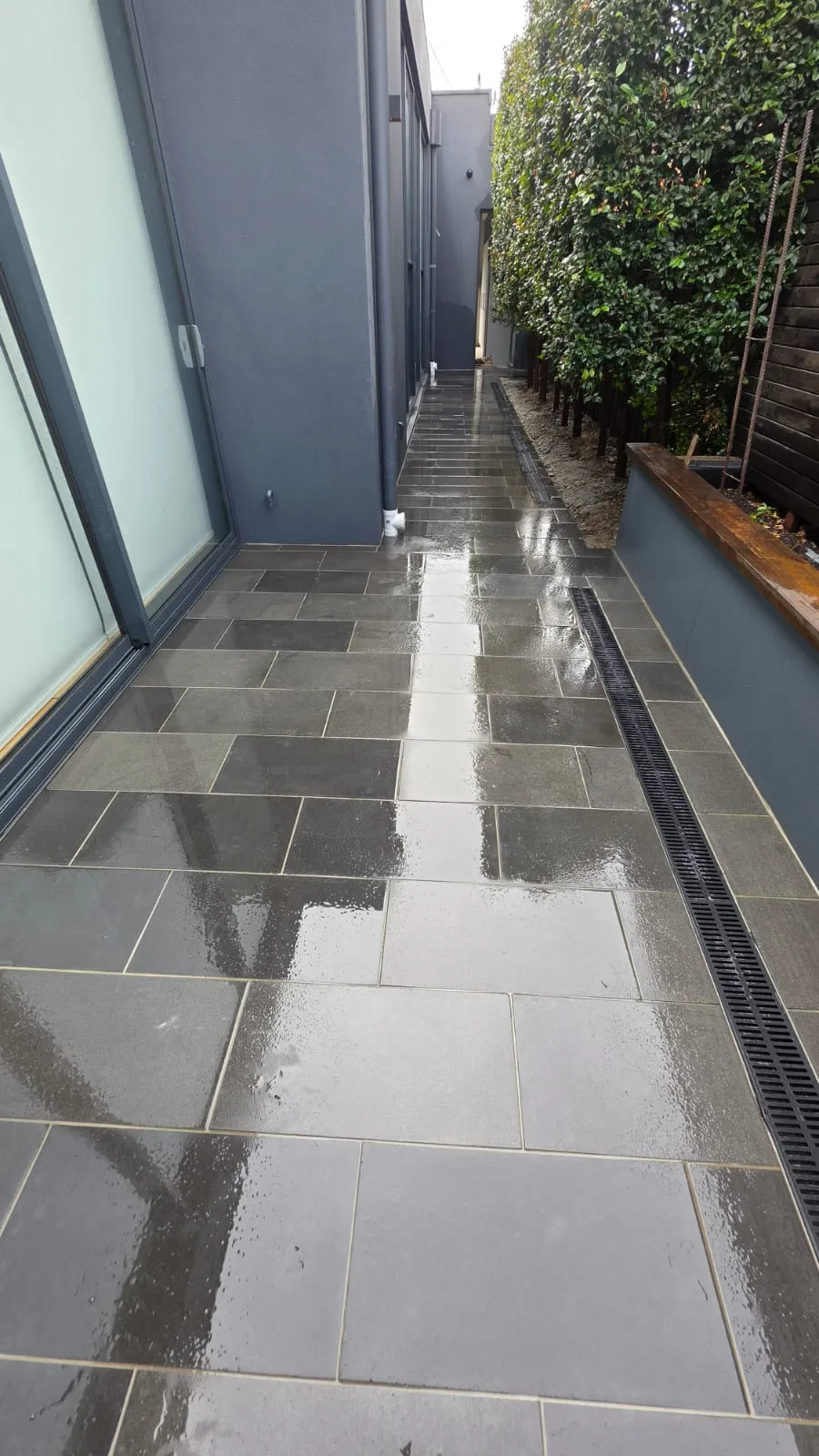
Bluestone's charcoal-grey tone suits Victorian and Edwardian homes, modern black-and-white facades and rendered new builds. Travertine's creams, beiges and walnut tones suit Mediterranean, Hamptons and warm contemporary homes. Laying pattern matters too: bluestone often looks best in a simple stretcher or stack bond; travertine shines in French pattern.
Driveways
If the same stone needs to carry cars, bluestone is the stronger candidate: use thicker pavers (30mm or more) on a deeper, vehicle-rated base. Travertine driveways are possible with thick, dense stone and a mortar bed, but most owners keep travertine for patios, paths and pools and use bluestone, brick or exposed aggregate for the driveway.
Cleaning
Sweep regularly, hose down, and use a pH-neutral stone cleaner. Avoid acid-based cleaners on both stones. They etch travertine and can mark bluestone.
Sealing: what to expect
We apply a penetrating sealer after the stone has dried out. It doesn't change the look much but makes stains easier to clean and slows moss and salt damage. Plan to reseal every three to five years depending on sun and pool chemicals.
Which suits your suburb?
On the reactive clay of Melbourne's east, Glen Waverley, Box Hill, Doncaster, Camberwell, both stones perform well on a properly compacted base with good drainage. In bayside suburbs like Brighton and Hampton, both handle salt air well when sealed; pale travertine is especially popular around pools there.
Sizes and patterns
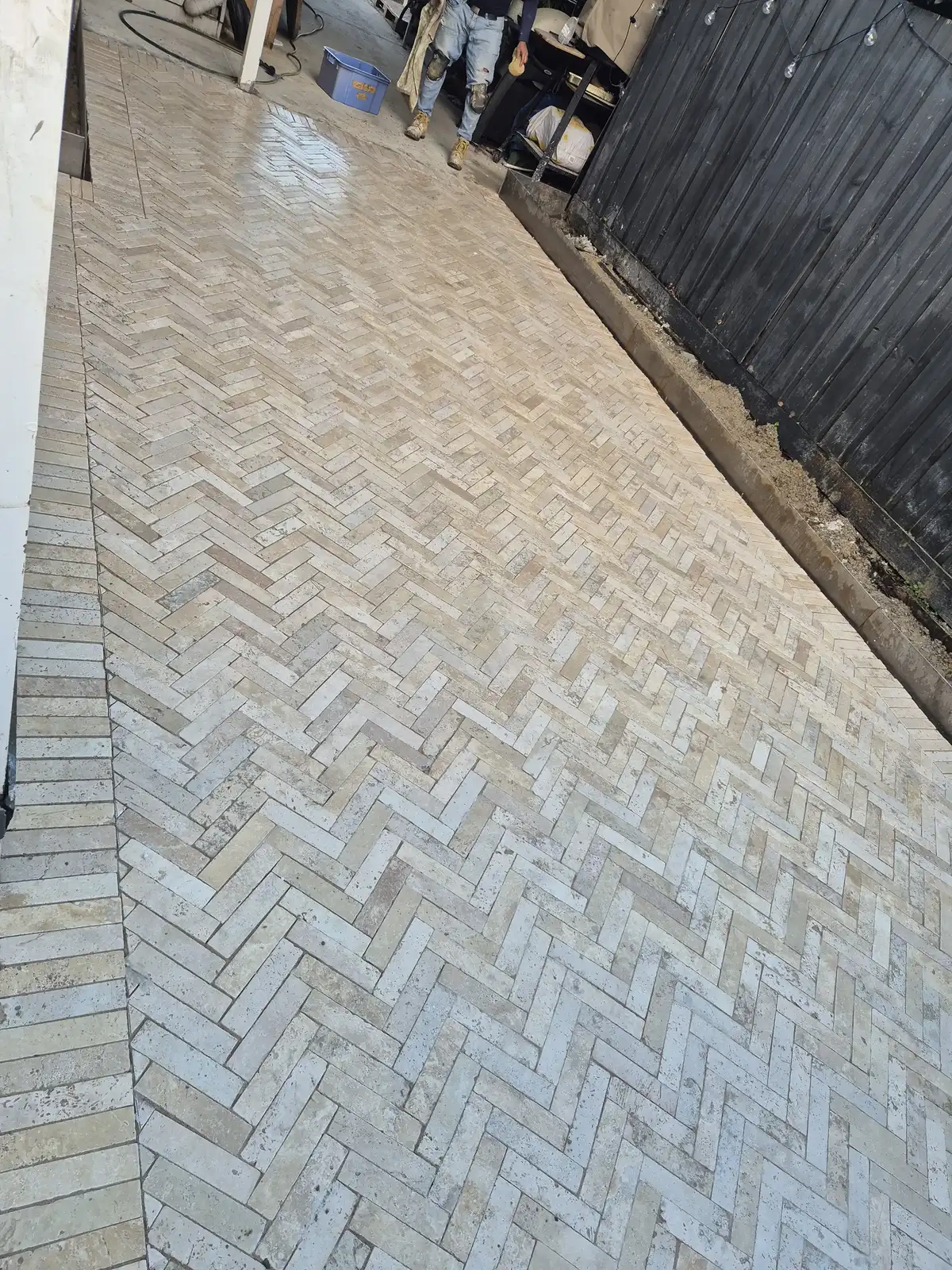
Bluestone is commonly laid in rectangular formats such as 600×300 or 400×400 in stretcher or stack bond, which gives a clean, architectural look. Travertine is often laid in French pattern, a repeating mix of four sizes that looks relaxed and hides small level differences. Both can be laid in herringbone for a more detailed finish, which adds labour and cutting. Larger formats mean fewer joints but need a flatter, better-supported base.
Edges, steps and coping
Both stones are available as bullnose or square-edge pieces for steps and pool coping. Bluestone steps and coping are very durable and give a strong edge line; travertine coping looks softer and matches a travertine surround well. Getting the step heights consistent and the coping overhang right is what makes the finished job look professional.
How each stone ages
Bluestone slowly develops a softer, slightly lighter patina and can look better after a few years. Travertine mellows too; unfilled travertine gains character as the natural holes weather. Neither fades like some coloured concrete pavers can, which is part of why natural stone holds its value.
Mixing the two
You don't have to choose just one. Bluestone front paths and entries with travertine out the back, or a travertine pool surround with bluestone coping and edging, are both common in Melbourne and look deliberate when colours are chosen together.
Questions to ask before you choose
- How much afternoon sun does the area get?
- Will cars ever drive on it?
- Do you prefer a crisp modern look or a warmer natural one?
- How much maintenance are you happy to do?
- Does the stone suit the colour of your house, roof and fence?
Antonio brings samples of both stones to every free site visit so you can see them in your own light, next to your house, before you decide.
Related services
From our recent work
Frequently Asked Questions
Is bluestone or travertine cheaper in Melbourne?
Bluestone is usually cheaper: $220–$265/m² laid versus $310–$350/m² for travertine ((inc GST, 2026)).
Which is cooler around a pool?
Light tumbled travertine is noticeably cooler underfoot than dark bluestone.
Which lasts longer?
Bluestone is denser and harder-wearing; well-sealed quality travertine also lasts decades on patios and pools.
Can I use both?
Yes, for example travertine surrounds with bluestone coping or edging.
What Melbourne Homeowners Say
⭐ 5.0 Google · 72 reviews · $20M insured · 1‑year workmanship warranty
Antonio completed our bluestone paving in Hampton and the result is outstanding. The levels, drainage and finishing details are flawless. Highly recommended for high-end paving.
We had a fairly complicated drainage issue on the site, but Antonio came up with a solution and executed it perfectly. The workmanship was top quality, and there were no unexpected surprises along the way.
Antonio runs a very professional small business. Friendly, punctual and hard working. Built 2 retaining walls and remodelled our driveway paving. Would use Antonio's service again.
Antonio and his colleague did a great job with our backyard brick laying. Easy to deal with, on time and professional.
Antonio just completed some brick paving alongside our front fence. The paving looks fabulous and was completed in 2 days. He was reliable and the work was completed to a high standard.
Antonio cleared out our small backyard, laid some pavers and built a step around our existing deck. He was quick to respond, well priced, and was happy to change and vary the scope of works as needed.
Get a Free Written Quote
Send a few details and photos. Antonio will reply the same day (Mon–Sat).