Home › Blog › Concrete Driveways vs Brick Paving — Melbourne
Concrete Driveways vs Brick Paving: Pros & Cons for Melbourne Homes
By Antonio PrimeScape | May 2026
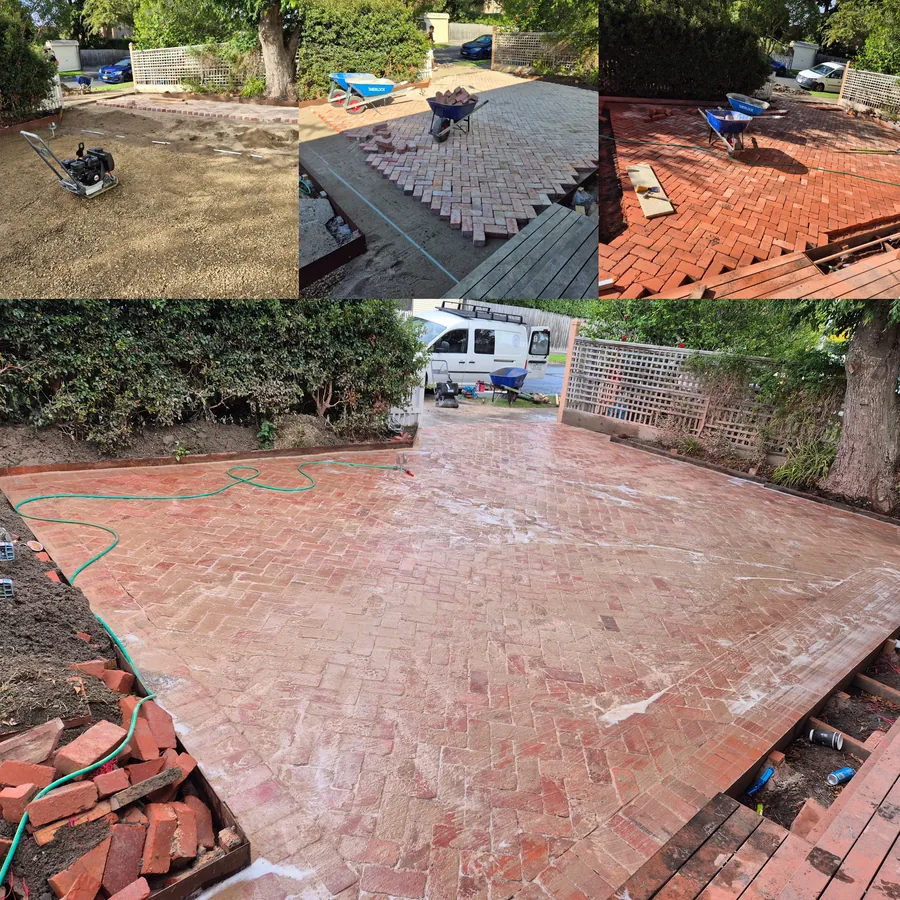
If you're replacing your driveway in Melbourne, the biggest decision is whether to go with concrete or brick paving. Both materials produce beautiful, long-lasting results — but they suit different budgets, property styles, and practical needs.
We install both, so this is an honest comparison based on 10+ years of experience across Melbourne's south-eastern suburbs.
Concrete Driveways — Overview
A concrete driveway is a single monolithic slab poured on-site. In Melbourne, the most common finishes are:
- Standard grey concrete: $60–$85/m² — functional but plain
- Exposed aggregate: $85–$130/m² — reveals decorative pebbles for a textured, premium look
- Stamped concrete: $90–$140/m² — imprinted with patterns to mimic stone, brick or slate
- Coloured concrete: $80–$120/m² — tinted throughout the mix
Pros of Concrete Driveways
- Lower upfront cost: Standard concrete is the cheapest driveway option at $60–$85/m²
- Minimal maintenance: Just annual pressure washing. No joints to maintain, no sand to replace
- Smooth surface: Ideal for basketball hoops, scooters, and wheelchair access
- Seamless look: No individual units to shift or settle unevenly
- Quick installation: A standard driveway can be poured, finished, and ready to drive on in 7–10 days
Cons of Concrete Driveways
- Cracks: Concrete will crack — it's inevitable. Control joints manage where cracks happen, but surface cracks are visible
- Expensive repairs: A cracked concrete slab can't be patched invisibly. Replacement often means removing and re-pouring large sections
- Tree roots: Concrete doesn't tolerate ground movement well. On Melbourne's reactive clay soils, tree roots can cause significant cracking
- Less character: Plain concrete looks utilitarian. Premium finishes (exposed aggregate, stamping) add cost that narrows the price gap with pavers
- Staining: Oil leaks from cars stain concrete permanently unless sealed
Brick Paving — Overview
Brick paving (also called block paving or pavers) uses individual clay or concrete units laid on a compacted base with sand joints. Costs vary significantly by material:
- Concrete pavers: $85–$120/m² — most affordable paver option, many colours and shapes
- Clay brick pavers: $100–$150/m² — premium fired clay, richer colour, lasts 50+ years
- Porcelain pavers: $130–$180/m² — ultra-thin, large-format, very low maintenance
Pros of Brick Paving
- Individual repair: Damaged pavers lift out individually for replacement — no visible patch
- Flexible — resists ground movement: Individual pavers move slightly without cracking. Ideal for Melbourne's reactive clay soils and areas with tree roots
- Design flexibility: Countless patterns (herringbone, stretcher bond, basketweave), colours, and material choices. A well-designed paver driveway adds noticeable kerb appeal
- Higher resale value: Brick paving consistently adds more to property value than concrete in Melbourne's premium suburbs
- Better drainage: Water drains through sand joints, reducing runoff. Can be upgraded to permeable paving with aggregate joints
Cons of Brick Paving
- Higher upfront cost: $15–$50/m² more than concrete
- Joint maintenance: Sand joints need topping up every 3–5 years. Polymeric sand reduces this frequency
- Weeds: Joints can grow weeds without proper polymeric sand or maintenance
- Slower installation: Typically 10–14 days for a standard driveway, compared to 7–10 for concrete
- Surface unevenness: Over decades, some pavers may settle slightly, creating a modestly uneven surface
Head-to-Head Comparison
Cost (40m² driveway): Concrete $2,400–$5,200 vs Brick Paving $3,400–$6,000. Concrete wins on price.
Lifespan: Both 25–40 years with proper installation. Clay pavers can outlast concrete on reactive soils.
Repairs: Brick paving wins easily — individual replacement is quick and invisible.
Kerb appeal: Brick paving wins for premium aesthetics. Exposed aggregate concrete is a strong contender.
Resale value: Brick paving typically returns 70–90% of its cost in added property value vs 50–70% for concrete.
Maintenance: Concrete requires less ongoing work. Pavers need occasional joint attention.
Tree root tolerance: Brick paving is significantly better — concrete is vulnerable.
Which Should You Choose?
Go with concrete if: budget is the primary concern, you want a smooth seamless surface, or you need a quick installation.
Go with brick paving if: you have trees or clay soil, kerb appeal and resale value matter, or you want a premium look with flexible repair options.
Our most common recommendation for Melbourne homes in suburbs like Glen Waverley, Mount Waverley, and Wheelers Hill is clay brick paving — it handles the soil conditions beautifully and adds the most value.
Read our detailed concrete vs pavers driveway guide for cost breakdowns and our brick paving cost guide for specific pricing by material and pattern.
Frequently Asked Questions
Which lasts longer — concrete or brick paving?
Both last 25–40 years. On stable soil, concrete may last longer. On reactive clay soil (common in Melbourne's south-east), brick paving typically outlasts concrete because individual pavers accommodate ground movement without cracking.
Does brick paving add more value to my Melbourne home?
Yes. Real estate agents consistently report that brick paving driveways add more kerb appeal and perceived value than concrete, particularly in premium suburbs. The return on investment is typically higher.
Can I combine concrete and brick paving?
Absolutely. A common design approach is a concrete driveway base with brick paver borders or a brick paver landing at the garage entrance. This blends cost savings with premium aesthetics.
Is concrete driveway maintenance really that low?
Yes — annual pressure washing is essentially all you need. However, if concrete cracks, the repair is significantly more expensive than replacing individual pavers.
Which is better for Melbourne's clay soil?
Brick paving. The flexibility of individual units means they move slightly with ground expansion and contraction without visible cracking. Concrete slabs on reactive clay need deep, engineered bases to avoid cracking.
Not Sure Which Option Is Best? Let's Discuss
Free written quotes for both concrete and brick paving. We'll help you choose the right material for your home.
📞 0406 170 544
📋 Free Quote Form
 Antonio PrimeScape Construction